PSLF can help qualifying public service borrowers achieve student loan forgiveness. Strategic planning around eligible loans, repayment plans, employment, income, taxes, and payment tracking can support progress toward forgiveness...
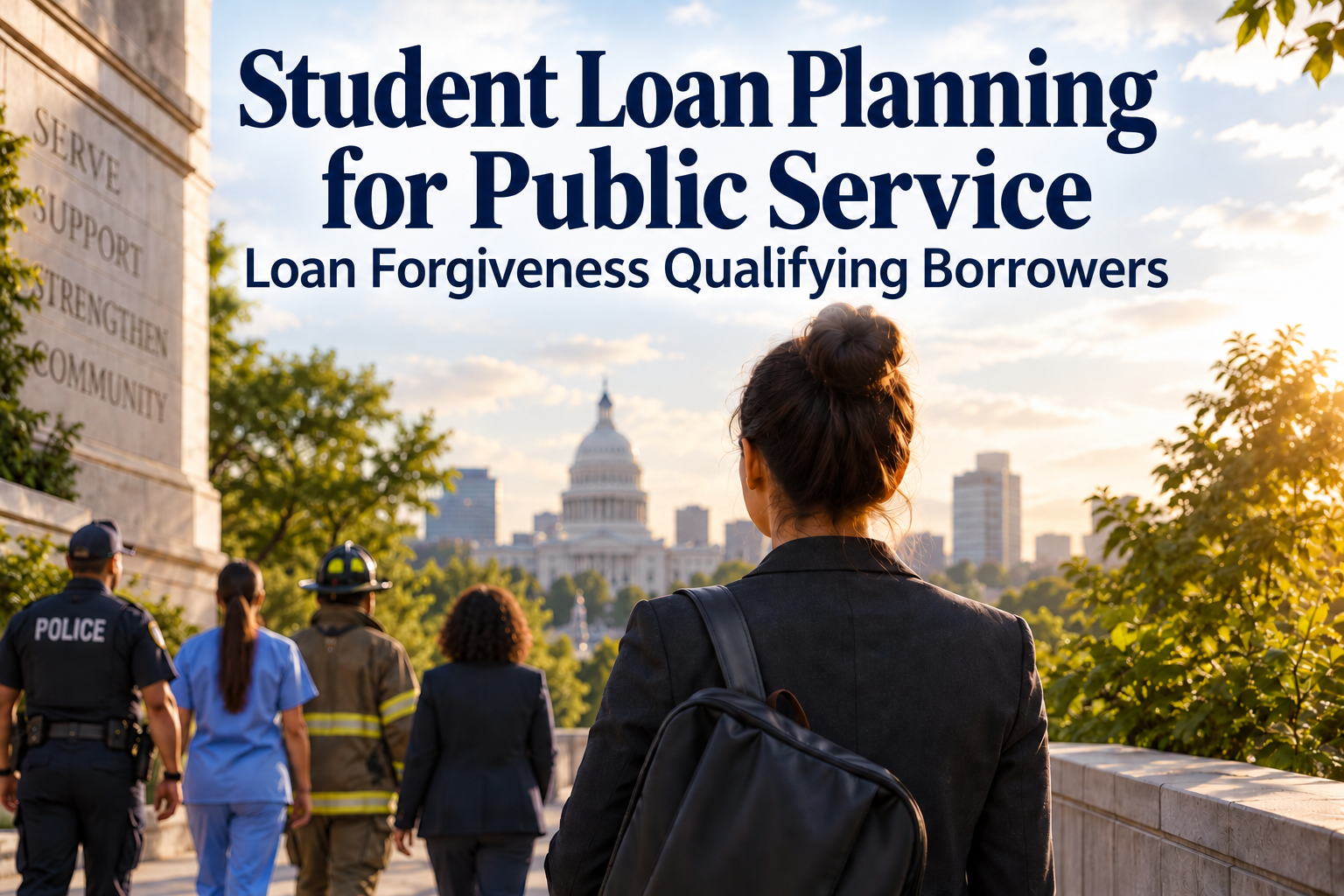
For borrowers working in government or eligible nonprofit organizations, Public Service Loan Forgiveness can potentially provide a path toward eliminating a remaining federal student loan balance. But qualifying for PSLF involves more than simply working in public service.
Borrowers generally need the correct type of federal loans, qualifying employment, an eligible repayment plan, and 120 qualifying monthly payments. Because several pieces need to work together, effective student loan planning can be particularly important for borrowers pursuing student loan forgiveness through PSLF.
Here are some of the most important areas borrowers should understand when building a long-term PSLF strategy.
Public Service Loan Forgiveness is a federal program designed for borrowers who work 30+ hours per week for qualifying public service employers.
Generally, PSLF forgives the remaining balance on eligible Direct Loans after a borrower makes 120 qualifying monthly payments while working 30+ hours per week average for an eligible employer.
Qualifying employers can include government organizations and 501(c)3 nonprofit organizations. Eligibility is generally based on the employer rather than the borrower's specific job title. That means people working in a wide range of professions may qualify if their employer meets PSLF requirements.
The Department of Education provides a PSLF Employer Search tool that borrowers can use to check an organization's eligibility.
Loan type is one of the first things borrowers should review when considering PSLF.
PSLF applies to federal Direct Loans. Borrowers with older federal loan types may need to determine whether consolidation into the Direct Loan program is necessary before those loans can qualify.
However, consolidation can have important consequences, particularly when a borrower already has qualifying payment history. Borrowers should understand how consolidation could affect their individual situation before making changes.
Private student loans are not eligible for PSLF.
The repayment plan used while pursuing PSLF can significantly affect the overall strategy.
Borrowers need to make their qualifying payments under an eligible repayment plan. Income-driven repayment plans can be especially relevant because payments are generally determined using factors such as income and family circumstances rather than simply dividing the loan balance across a fixed repayment period.
The federal repayment system has also undergone significant changes. The SAVE Plan is no longer available following a federal court order in March 2026. Borrowers now need to evaluate the repayment options for which they currently qualify.
Available options can depend on when loans were borrowed and the types of federal loans involved. Current federal options include Income-Based Repayment, or IBR, as well as the newer Repayment Assistance Plan, or RAP, for eligible borrowers. PAYE and ICR remain available to certain borrowers but are scheduled to end no later than July 1, 2028.
Because repayment rules can change, borrowers pursuing student loan forgiveness should periodically review their repayment strategy instead of assuming the plan they previously selected will remain their best or available option indefinitely.
A lower payment can be valuable for someone pursuing PSLF, but monthly payment amount is only one part of the equation.
The larger goal is often to determine how much a borrower may reasonably expect to pay before reaching forgiveness.
For example, income changes, marriage, family size, tax filing choices and career changes can potentially affect income-driven payments. A borrower expecting significant income growth may therefore need a different strategy than someone whose earnings are likely to remain relatively stable.
Student loan planning for PSLF should ideally consider the entire projected repayment period rather than focusing only on this month's bill.
Borrowers should also keep their PSLF employment records current.
Federal Student Aid recommends submitting a PSLF form annually as a way to validate progress and keep qualifying payment counts updated. Borrowers can use the PSLF Help Tool through StudentAid.gov to certify qualifying employment and monitor their progress.
This can make it easier to identify potential problems before reaching the end of the 120-payment requirement.
Borrowers should also review their qualifying payment count periodically rather than waiting until they believe they have reached forgiveness.
PSLF qualifying payments are cumulative, and do not need to be consecutive.
If a borrower leaves qualifying public service employment, previously earned qualifying payment credit generally is not erased. The borrower may stop accumulating qualifying payments during a period of non-qualifying employment but potentially resume progress after returning to eligible employment.
This can be particularly important for teachers, healthcare professionals, government employees and nonprofit workers whose careers may involve multiple employers.
Before accepting a new position, borrowers pursuing PSLF may want to check whether the new employer qualifies.
For borrowers using an income-driven repayment plan, tax planning and student loan planning can become closely connected.
Depending on the repayment plan, marital status and tax filing status can affect which income is considered when calculating payments. A decision that reduces a student loan payment is not automatically the best overall financial decision if it creates larger costs elsewhere.
Instead, borrowers may benefit from looking at student loans and taxes together.
The objective should not necessarily be to create the lowest possible student loan payment at any cost. It is to determine an appropriate overall strategy based on the borrower's loans, income, household, taxes, career and forgiveness goals.
PSLF can be a long-term process, and a borrower's financial situation can change considerably during that time.
Income may rise. Someone may get married or divorced. Children may enter or leave the household. A borrower may change employers, receive new federal loans or switch repayment plans.
Each change can potentially affect the overall student loan strategy.
Borrowers should therefore treat PSLF planning as an ongoing process rather than a decision they make once and forget about for the next decade.
Public Service Loan Forgiveness can provide substantial relief for qualifying borrowers, but reaching forgiveness requires more than making payments and waiting for 10 years.
Your loan type, employer, repayment plan, income, family circumstances and qualifying payment history can all play a role in the outcome.
At Student Loan Tutor, we help borrowers understand their federal student loans and develop strategies around their individual circumstances. For borrowers pursuing student loan forgiveness through PSLF, that can include reviewing repayment options, understanding qualifying payment progress and evaluating how changes in income, employment and household circumstances may affect the path forward.
If PSLF is part of your long-term plan, having a strategy and reviewing it regularly can help you stay informed as you work toward the 120 qualifying payments required for forgiveness.
Student Loan Tutor helps borrowers evaluate these moving pieces as part of a personalized student loan strategy. Visit studentloantutor.com to learn how your tax decisions and repayment choices could affect your path toward student loan forgiveness.
The strategy outlined in this article is designed to help you save on federal student loans and work towards forgiveness. Please be aware that the federal student loan landscape is subject to change. Adjustments to this strategy may be necessary with evolving regulations and policies, and by working with us, you can be confident that you are leveraging expert guidance to ensure you are always on the best path to maximize your student loan forgiveness.The contents of this article are the property of Student Loan Tutor. This message may contain an advertisement of a product or service. Student Loan Tutor does not render legal, tax or accounting advice. Accordingly, you and your attorneys and accountants are ultimately responsible for determining the legal, tax and accounting consequences of any suggestions offered herein. We recommend that you consult with your legal and tax advisers regarding this communication. Student Loan Tutor is not affiliated in any way with the US Department of Education. The estimates contained herein are based on estimates derived from the studentaid.gov federal student loan repayment calculator, taking into consideration repayment plans, federal student loan forgiveness, and tax implications associated with current tax estimates using TurboTax percentages for 2025. Student Loan Tutor accepts no liability for estimates contained herein as a borrower's life circumstances, final submitted documents, student loan law subsidies, loan forgiveness and tax implications can change at any time without any notice and many of these strategies are only recently starting to be realized due to long loan forgiveness terms. A number of factors could drastically change these figures, including but not limited to the following: using forbearance or deferment, missing a recertification, changes in law including but not limited poverty line index, spousal income, income documentation protocol, repayment plans, public service loan forgiveness qualifications, tax law, household size, additional loans, consolidations, refinancing and the COVID-19 Pandemic.
Looking for more information about how to navigate the terrain of student loans? Check out more of our most recent blog posts.
September 7, 2026
Changing student loan servicers can create confusion, but your debt does not disappear. Verify balances, payments, repayment plans, auto pay, and account details to keep your student loan strategy on track...
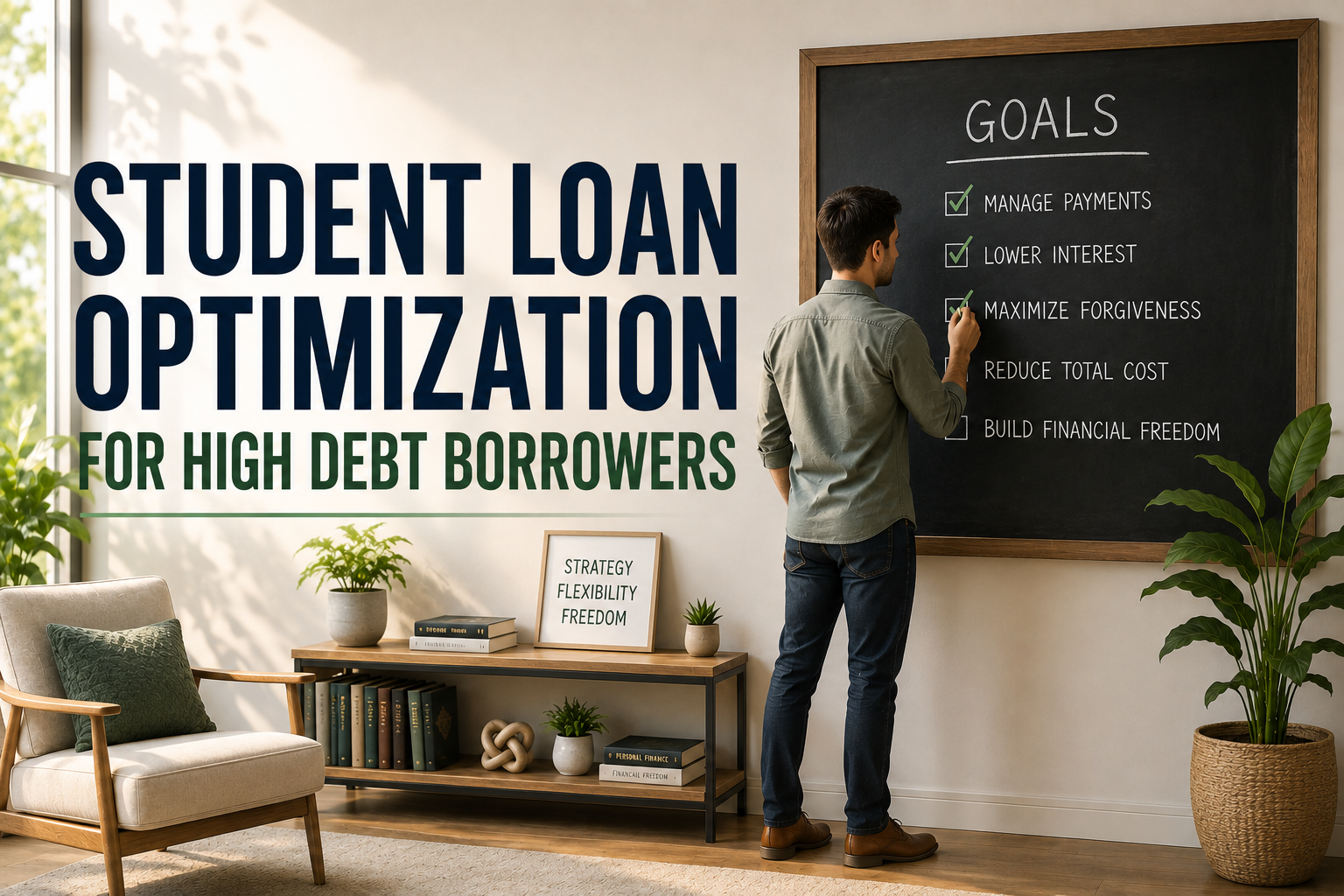
August 31, 2026
Student Loan Tutor helps high debt borrowers evaluate repayment plans, forgiveness opportunities, income, taxes, and career factors to build a personalized strategy for managing student loans and reducing long-term costs...
August 24, 2026
Tax strategy can influence student loan payments and forgiveness. Managing income, filing status, retirement contributions, and potential tax consequences can help borrowers reduce costs and build a smarter repayment strategy...


