Strategic student loan repayment can help borrowers avoid overpaying by considering repayment plans, forgiveness, income changes, taxes, interest, autopay benefits, and long-term financial goals before making additional payments...
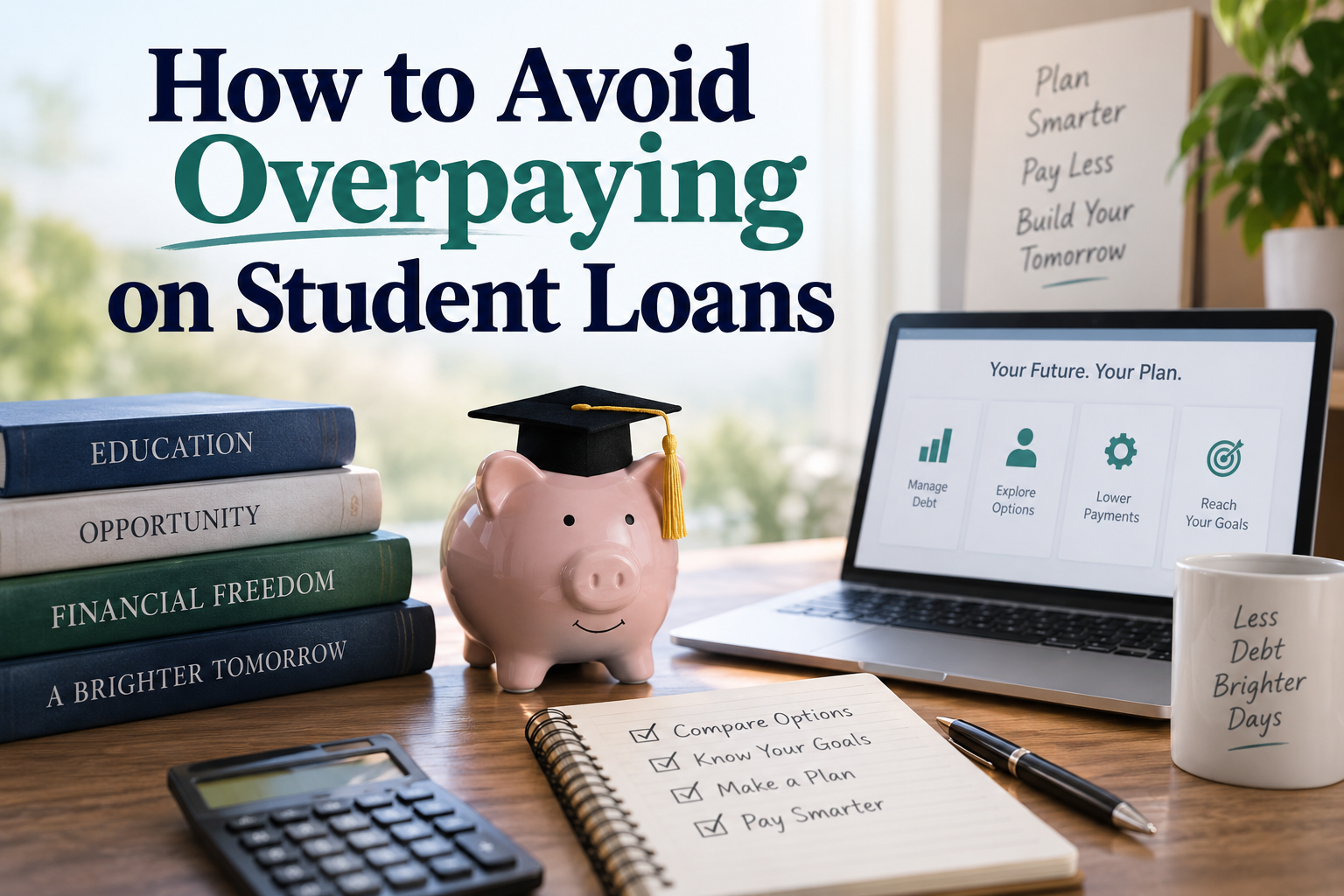
Paying more toward student loans may sound like the fastest way to become debt-free, but paying more is not always the same as paying strategically. Depending on your loan type, income, career, repayment plan, and eligibility for forgiveness, sending extra money to your loans could potentially cost you more than necessary.
For borrowers looking for student loan help, the first step is understanding how the different pieces of repayment work together. A strategy that makes sense for one borrower may be unnecessarily expensive for another.
Here are several ways borrowers can potentially avoid overpaying on their student loans.
Federal student loan borrowers may have multiple repayment options, depending on when their loans were borrowed and the types of loans they have.
Some plans focus on paying the debt off over a set period, while income-driven repayment plans calculate payments using factors such as income and family size.
Federal repayment options changed significantly in 2026. The Repayment Assistance Plan, or RAP, and Tiered Standard Plan became available beginning July 1, 2026. The SAVE Plan has ended, and borrowers previously relying on SAVE may need to select another available repayment option.
Because eligibility varies, borrowers should review the plans currently available for their specific loans rather than assuming an older repayment strategy still applies.
A lower monthly payment does not automatically mean a lower overall cost.
Extending repayment can reduce what you owe each month but may increase the amount of interest paid over time. On the other hand, aggressively paying down a federal loan may not make sense for someone who expects to qualify for a federal forgiveness program.
When comparing strategies, consider:
Good student loan help should consider both your current payment and the long-term outcome.
Income-driven repayment, or IDR, can be an important option for eligible federal student loan borrowers.
Rather than basing payments solely on the size of the loan balance, these plans generally use income and other applicable factors to determine required payments.
Depending on your circumstances, an IDR plan could produce a substantially different payment than a standard repayment plan.
Borrowers should also pay attention to annual recertification requirements. Missing required updates can affect your repayment situation, so keeping your information current is an important part of managing an IDR strategy.
Before aggressively paying down federal student loans, determine whether you could qualify for forgiveness.
Public Service Loan Forgiveness, or PSLF, may forgive the remaining balance on eligible Direct Loans after a borrower meets the program's requirements, including making 120 qualifying monthly payments while working for a qualifying employer.
If you are pursuing PSLF, making unnecessary additional payments toward loans that could ultimately qualify for forgiveness may work against your larger financial strategy.
The goal should not automatically be to eliminate the balance as quickly as possible. The goal is to determine which repayment approach makes the most financial sense for your circumstances.
Forbearance can provide temporary relief when you cannot afford your required payment, but it should not automatically be treated as a long-term solution.
Interest may continue accumulating during periods of forbearance. Certain periods may also affect progress toward loan discharge or forgiveness.
If your income has fallen or your financial circumstances have changed, investigate whether another repayment option is available before relying on repeated periods of forbearance.
You may not always have to wait until your annual recertification to address a significant income change.
For example, if you are enrolled in an eligible income-driven plan and experience a job loss or reduction in income, you may be able to request that your payment be recalculated based on your current circumstances.
Getting student loan help after a major financial change can help you determine whether your existing payment still makes sense.
For married borrowers, tax filing status can sometimes affect how income is treated under certain federal repayment plans.
The rules vary depending on the repayment plan, loan history, and other circumstances. Filing taxes separately solely to reduce a student loan payment is not automatically the best financial decision because tax consequences also need to be considered.
Student loan and tax strategies should therefore be evaluated together when appropriate.
Automatic payments can make it easier to avoid missed due dates and may provide an interest rate benefit for eligible federal loans.
Beginning July 1, 2026, eligible federal borrowers enrolled in autopay can receive a temporary 1% interest rate reduction if autopay is enabled before September 30th, 2026. Borrowers should check the current eligibility requirements and deadlines associated with this benefit.
Even a seemingly small interest rate reduction can make a difference when applied to a large student loan balance.
Student loan repayment should not be something you choose once and then ignore for years.
Income changes. Families grow. Borrowers get married, change jobs, start businesses, or enter public service. Federal student loan rules can also change.
Reviewing your strategy periodically can help identify whether your current repayment plan continues to fit your financial situation and long-term goals.
Avoiding overpayment on student loans is about more than finding the lowest monthly payment or sending as much money as possible to your balance. It requires understanding your loan type, repayment options, income, forgiveness eligibility, interest costs, and long-term financial goals.
For borrowers who are unsure whether their current strategy is costing them more than necessary, Student Loan Tutor can help evaluate available repayment options and develop a strategy based on their individual circumstances.
Visit studentloantutor.com to learn more about getting personalized student loan help and exploring a repayment strategy designed around your financial situation.
Student Loan Tutor helps borrowers evaluate these moving pieces as part of a personalized student loan strategy. Visit studentloantutor.com to learn how your tax decisions and repayment choices could affect your path toward student loan forgiveness.
The strategy outlined in this article is designed to help you save on federal student loans and work towards forgiveness. Please be aware that the federal student loan landscape is subject to change. Adjustments to this strategy may be necessary with evolving regulations and policies, and by working with us, you can be confident that you are leveraging expert guidance to ensure you are always on the best path to maximize your student loan forgiveness.The contents of this article are the property of Student Loan Tutor. This message may contain an advertisement of a product or service. Student Loan Tutor does not render legal, tax or accounting advice. Accordingly, you and your attorneys and accountants are ultimately responsible for determining the legal, tax and accounting consequences of any suggestions offered herein. We recommend that you consult with your legal and tax advisers regarding this communication. Student Loan Tutor is not affiliated in any way with the US Department of Education. The estimates contained herein are based on estimates derived from the studentaid.gov federal student loan repayment calculator, taking into consideration repayment plans, federal student loan forgiveness, and tax implications associated with current tax estimates using TurboTax percentages for 2025. Student Loan Tutor accepts no liability for estimates contained herein as a borrower's life circumstances, final submitted documents, student loan law subsidies, loan forgiveness and tax implications can change at any time without any notice and many of these strategies are only recently starting to be realized due to long loan forgiveness terms. A number of factors could drastically change these figures, including but not limited to the following: using forbearance or deferment, missing a recertification, changes in law including but not limited poverty line index, spousal income, income documentation protocol, repayment plans, public service loan forgiveness qualifications, tax law, household size, additional loans, consolidations, refinancing and the COVID-19 Pandemic.
Looking for more information about how to navigate the terrain of student loans? Check out more of our most recent blog posts.
September 14, 2026
PSLF can help qualifying public service borrowers achieve student loan forgiveness. Strategic planning around eligible loans, repayment plans, employment, income, taxes, and payment tracking can support progress toward forgiveness...
September 7, 2026
Changing student loan servicers can create confusion, but your debt does not disappear. Verify balances, payments, repayment plans, auto pay, and account details to keep your student loan strategy on track...
August 31, 2026
Student Loan Tutor helps high debt borrowers evaluate repayment plans, forgiveness opportunities, income, taxes, and career factors to build a personalized strategy for managing student loans and reducing long-term costs...


