After you submit a student loan form, it goes through verification, eligibility review, and processing before aid is offered. Knowing the steps helps you avoid delays and stay on track...
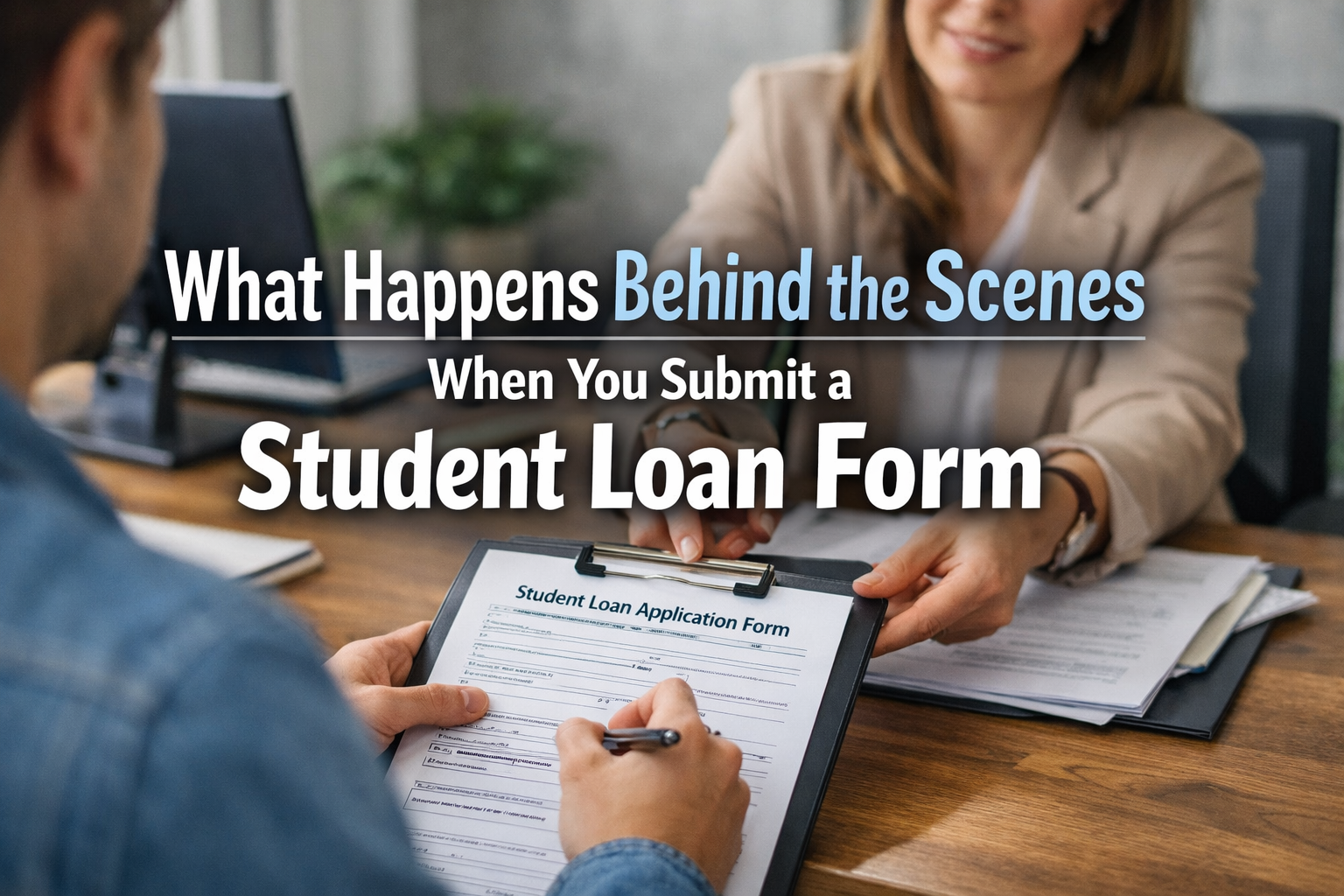
Submitting a student loan application is a major milestone in funding your college education, but what exactly happens after you click “submit”? Whether you’re applying for federal aid through FAFSA or a private student loan, there’s a structured behind-the-scenes process that determines if and how much aid you’ll receive. Understanding these steps can help you stay prepared and confident throughout the journey.
Once your form is submitted:
FAFSA Confirmation
For federal student loans, your FAFSA submission generates a confirmation page and email indicating your form has been received. This doesn’t yet guarantee aid — it simply means your data is officially in the system.
Private Loan Acknowledgment
If you apply for a private student loan, most lenders take a moment to verify that your application is complete before moving forward with reviews.
Data Review and Validation
For federal aid, the U.S. Department of Education processes your FAFSA, checking for errors, missing information, and eligibility based on federal criteria.
Your FAFSA information is then sent to each school you listed so their financial aid offices can begin evaluating your eligibility.
Credit and Financial Checks for Private Loans
Private lenders typically pull your credit report and review other financial information to determine eligibility and interest rates. Many applicants get an instant decision, but some may be asked for additional documentation.
Within a few weeks of submission, typically 1–3 business days for online FAFSA submissions, the federal system generates a Student Aid Report (SAR) summarizing your data.
The SAR includes:
• Your eligibility indicators
• Any corrections needed
• Your Student Aid Index (SAI) a key figure schools use to calculate how much aid you might receive.
It’s important to log into your FAFSA account to review this summary carefully and correct any errors promptly.
Once your FAFSA is processed, each college or university you applied to uses your information to create a financial aid offer. This package may include:
• Federal Direct Loans
• Grants and scholarships
• Work-study opportunities
You’ll typically receive these offers via email or your school’s portal.
Federal Loans
To finalize federal loans, you must:
• Accept the amount offered
• Complete entrance counseling (if required)
• Sign a Master Promissory Note (MPN) a legal agreement to repay your loan.
Private Loans
If approved, your private lender will send loan documents specifying terms, interest rates, and repayment expectations. You must sign these before funds are released.
Whether federal or private, student loans are usually disbursed directly to your school to pay for tuition, fees, and other charges.
If there’s money left over after school costs are covered, it may be issued to you for textbooks, supplies, or living expenses.
After submission:
• Monitor your application status on your FAFSA account or lender portal.
• Respond quickly to document requests or verification steps.
• Stay aware of deadlines from both your institution and lenders.
Starting early helps ensure funds arrive before tuition deadlines.
Understanding what happens behind the scenes after you submit a student loan form empowers you to make smarter decisions and navigate the process with confidence. From federal FAFSA processing to private lender reviews and final disbursement, each step is designed to assess eligibility and get funds where they’re needed most.
If you ever feel stuck or overwhelmed, resources such as trusted guides like Student Loan Tutor are here to help you every step of the way.
The strategy outlined in this article is designed to help you save on federal student loans and work towards forgiveness. Please be aware that the federal student loan landscape is subject to change. Adjustments to this strategy may be necessary with evolving regulations and policies, and by working with us, you can be confident that you are leveraging expert guidance to ensure you are always on the best path to maximize your student loan forgiveness.The contents of this article are the property of Student Loan Tutor. This message may contain an advertisement of a product or service. Student Loan Tutor does not render legal, tax or accounting advice. Accordingly, you and your attorneys and accountants are ultimately responsible for determining the legal, tax and accounting consequences of any suggestions offered herein. We recommend that you consult with your legal and tax advisers regarding this communication. Student Loan Tutor is not affiliated in any way with the US Department of Education. The estimates contained herein are based on estimates derived from the studentaid.gov federal student loan repayment calculator, taking into consideration repayment plans, federal student loan forgiveness, and tax implications associated with current tax estimates using TurboTax percentages for 2025. Student Loan Tutor accepts no liability for estimates contained herein as a borrower's life circumstances, final submitted documents, student loan law subsidies, loan forgiveness and tax implications can change at any time without any notice and many of these strategies are only recently starting to be realized due to long loan forgiveness terms. A number of factors could drastically change these figures, including but not limited to the following: using forbearance or deferment, missing a recertification, changes in law including but not limited poverty line index, spousal income, income documentation protocol, repayment plans, public service loan forgiveness qualifications, tax law, household size, additional loans, consolidations, refinancing and the COVID-19 Pandemic.
Looking for more information about how to navigate the terrain of student loans? Check out more of our most recent blog posts.

October 5, 2026
Lower student loan payments can provide short-term relief but may increase long-term costs. Understanding interest, repayment length, forgiveness eligibility, income, and total repayment can help borrowers choose strategically...

September 28, 2026
This article explores strategies for managing student loan debt while pursuing long-term forgiveness, including repayment plans, PSLF, income changes, extra payments, administrative requirements, and evaluating overall long-term repayment costs...
September 21, 2026
Strategic student loan repayment can help borrowers avoid overpaying by considering repayment plans, forgiveness, income changes, taxes, interest, autopay benefits, and long-term financial goals before making additional payments...


